Photograph every style, colourway and angle of a new shoe collection in-house, then publish to your store, marketplaces and social media in days, not weeks.
A new shoe collection cannot sell online until it has been photographed — every style, in every colourway, from every angle a buyer expects to see. For many footwear brands and retailers, that step, not design or manufacturing, is what holds a launch back.
This guide looks at why footwear is slow to photograph the traditional way, what weak product images cost in conversions and returns, and how an automated studio such as the EasyCLIQ X3 gets a full collection online in days instead of weeks.
Why shoe launches slow down online
Footwear is one of the most demanding categories to photograph at scale. A single style often comes in several colourways, and each colourway needs the same set of views before it can be listed: the outer side profile, front, back, top-down, the sole and usually a pair shot.
The numbers add up quickly. Five colourways with six views each is thirty images for one style; a seasonal drop of twenty styles is six hundred — all of which have to match one another and meet each marketplace’s rules on white backgrounds, image sizes and angles.
A slow, manual shoot
Shot by hand, every pair has to be cleaned, laced and stuffed so it holds its shape, then placed, lit and photographed from each angle in turn. Mesh, leather, suede and glossy trims all react differently to light, so settings are adjusted again and again — and each adjustment risks the next colourway looking different from the last.
Then come the edits: removing backgrounds, straightening angles, correcting colour and exporting the right sizes for every channel. With an outside studio, add the time spent sending samples out and waiting for them to come back. It is not unusual for the images to arrive after the stock has already reached the warehouse.
Inconsistent images make a collection look disjointed
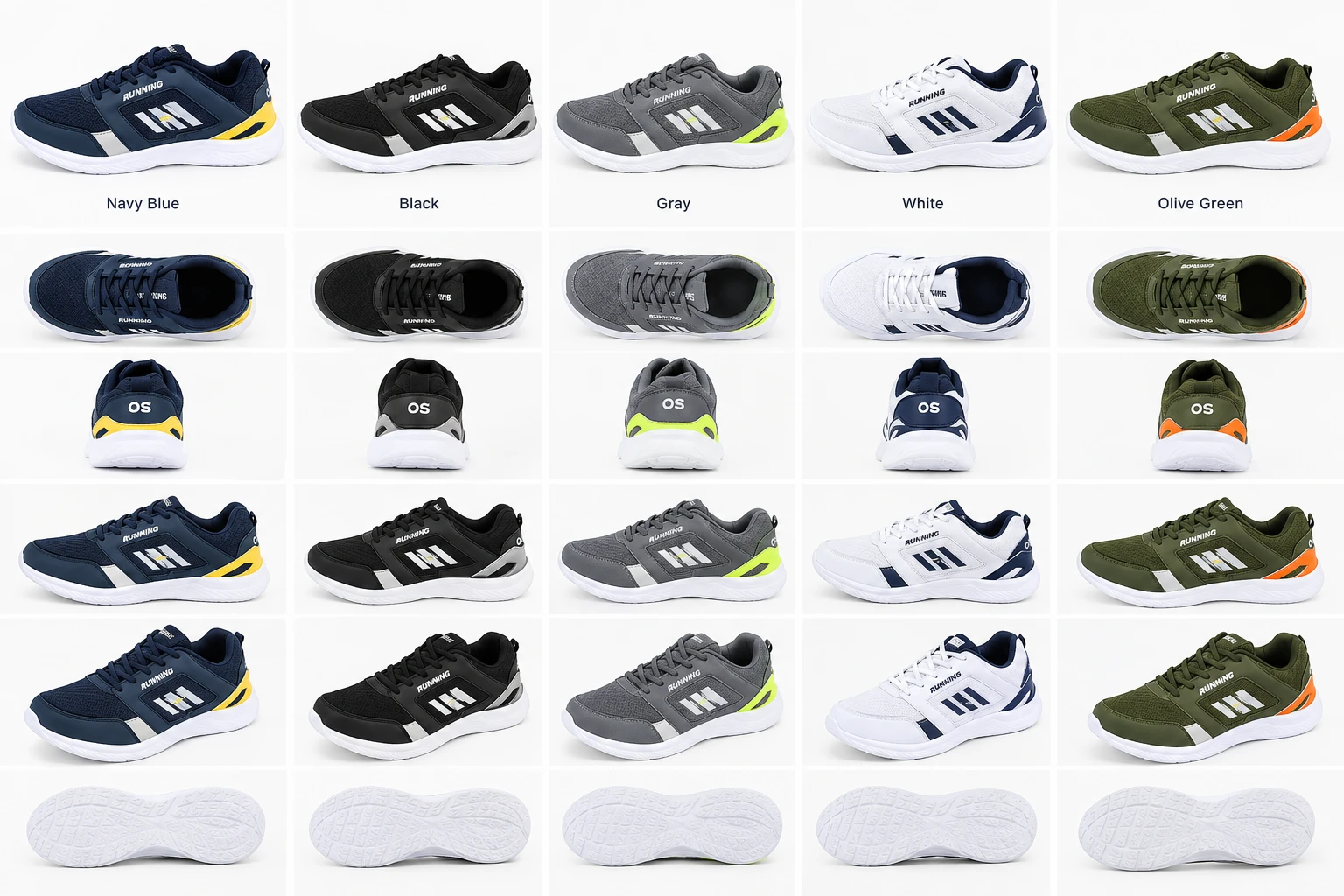
Shoppers compare colourways side by side. When one colour is shot slightly from above, another looks warmer and a third sits lower in the frame, the collection looks as if it came from different brands — and the buyer starts to wonder which colour is true.
Consistency means the same angles, framing, lighting and background for every colourway and every style, so the shoe is the only thing that changes from one image to the next.
Weak product images cost sales — and bring pairs back
Online, photographs stand in for picking a shoe up and turning it over. If a buyer cannot see the heel, the sole pattern or what the upper looks like up close, they are more likely to leave the page — or to order two colours and send one back.
Returns are costly in footwear: every returned pair has to be shipped, checked and repackaged, and a pair that arrives looking different from its photographs costs the customer’s trust as well as the sale. Accurate colour and a complete set of views set the right expectations before the order is placed.
How automated product photography speeds up a shoe launch
Faster turnaround
Place the shoe, choose the saved template and shoot. The software handles the lighting, camera settings, angles and background removal, taking a shoe from the turntable to publish-ready images in minutes rather than days.
The same angles for every colourway
Light settings, colour temperatures and robotic camera positions are saved once as a template, then recalled with one click for every colour, so the whole collection lines up without re-measuring a single shot.
360° spins and video
The same session produces interactive 360° spins and short product videos — the formats that answer questions about shape and sole before a buyer has to ask.
Lower cost per image
Photography moves in-house, with no studio hire or per-image fees, and the software is included with no recurring subscription. No photography experience is needed, so the team that manages the stock can shoot it.
Fewer surprises on delivery
True-colour lighting and every angle, including the sole, show buyers exactly what will arrive — helping cut down the “not as pictured” returns that eat into footwear margins.
One shoot, every channel
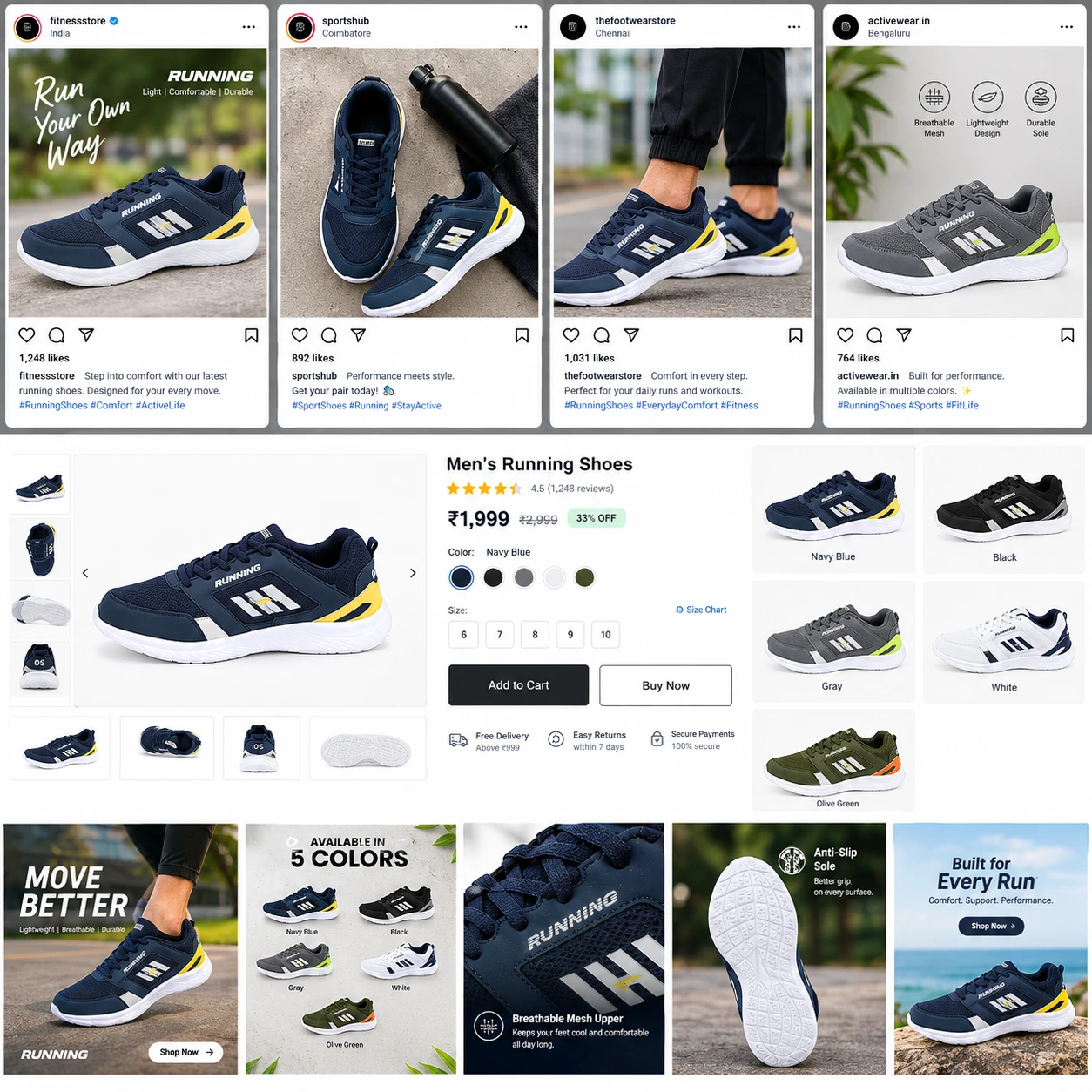
A launch needs far more than a product page. Marketplaces want clean white-background images in fixed sizes; your own store wants the full gallery and a 360° spin; social media and advertising want lifestyle crops, colour line-ups and feature call-outs.
When every asset starts from the same consistent studio images, the rest is resizing and design rather than another shoot. The listing, the colour thumbnails, the retailers’ posts and the campaign banners all show the same, true product.
Launch day on social media
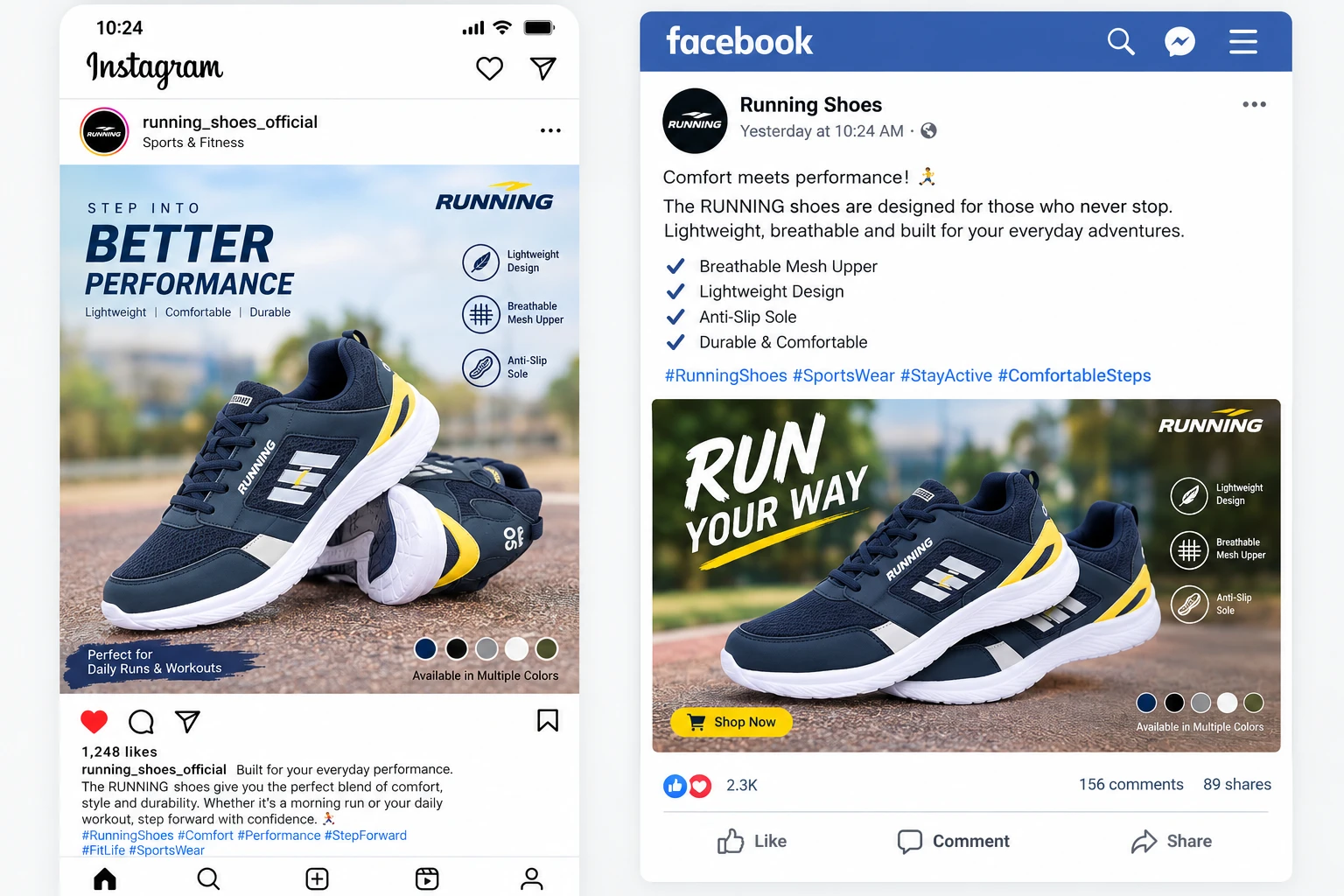
With images ready on day one, launch posts can go out the same day the stock does. Clean product shots drop straight into branded templates for Instagram and Facebook, and short turntable videos become Reels and Stories.
Because every colourway was photographed the same way, an “available in five colours” post or a colour-by-colour carousel takes minutes to put together instead of a reshoot.
Where EasyCLIQ X3 fits in a footwear launch
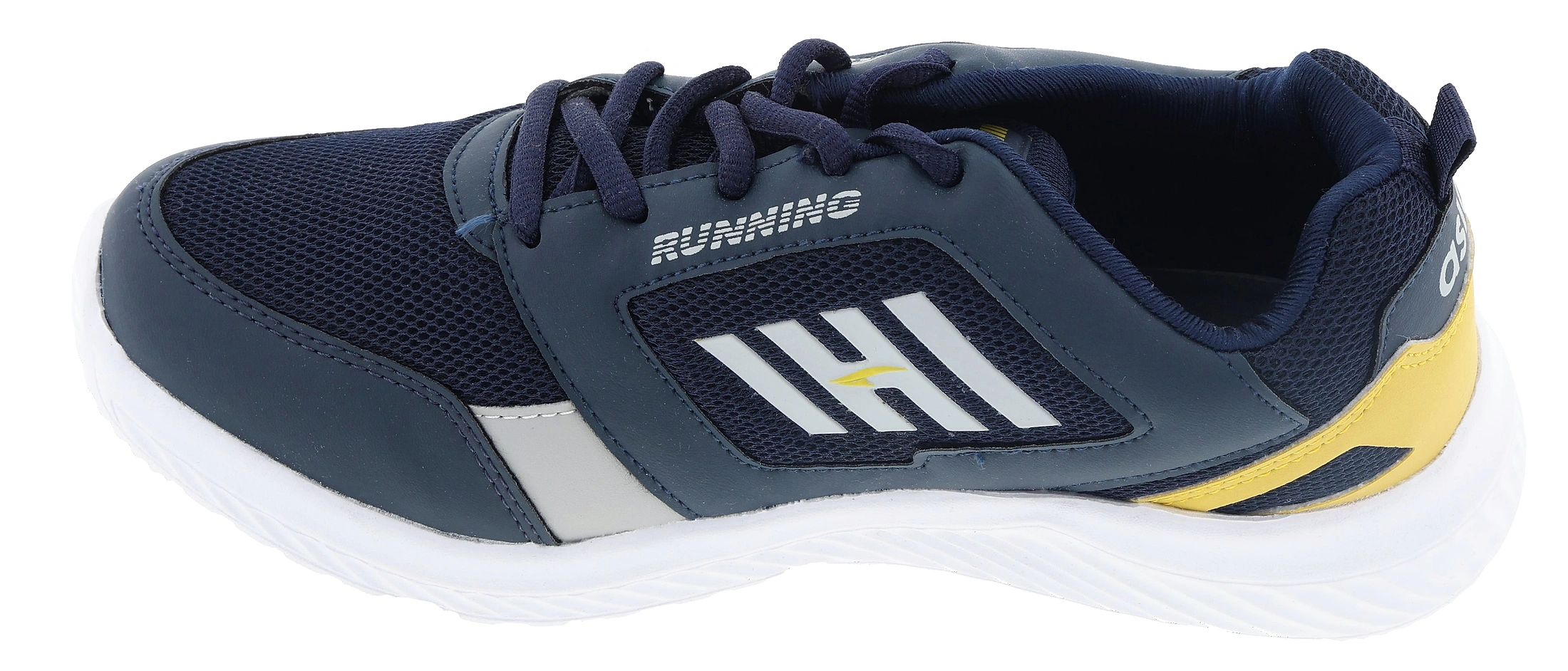
- A 60 cm turntable that carries up to 10 KG takes single shoes, pairs and boots, and the dual top and bottom turntables deliver a complete 360° spin.
- The precision robotic camera arm repeats the same angles for every style and colourway, and films cinematic product reveals, without anyone repositioning a camera.
- Ten independently controllable lights, adjustable from 3000K to 6000K at 90+ CRI, are set once per material — mesh, leather, suede or glossy trims — and saved as a template.
- One-click background removal and export to PNG, JPEG and animated GIF produce images that meet the specifications of major marketplaces such as Amazon and Flipkart.
- From placing the shoe on the turntable to publish-ready images, including the 360° spin, takes under three minutes, and staff training typically takes under two hours.
Get your next collection online faster
Every day a new collection waits for photography is a day it is not selling. Bringing the shoot in-house, and automating its repetitive parts, turns product photography from the slowest step of a launch into one of the quickest.
To see how it works with your own footwear, book a demo and we will photograph your shoes on an EasyCLIQ X3 — every angle and every colourway — before you decide.